
Questions about Thai massage benefits often combine two different things: what visitors may value in a wellness session, and what researchers have measured in clinical studies. The studies can inform expectations, but their results do not promise what a single spa appointment will do. Here is a careful look at the evidence and how it relates to choosing a session in Mae Nam.
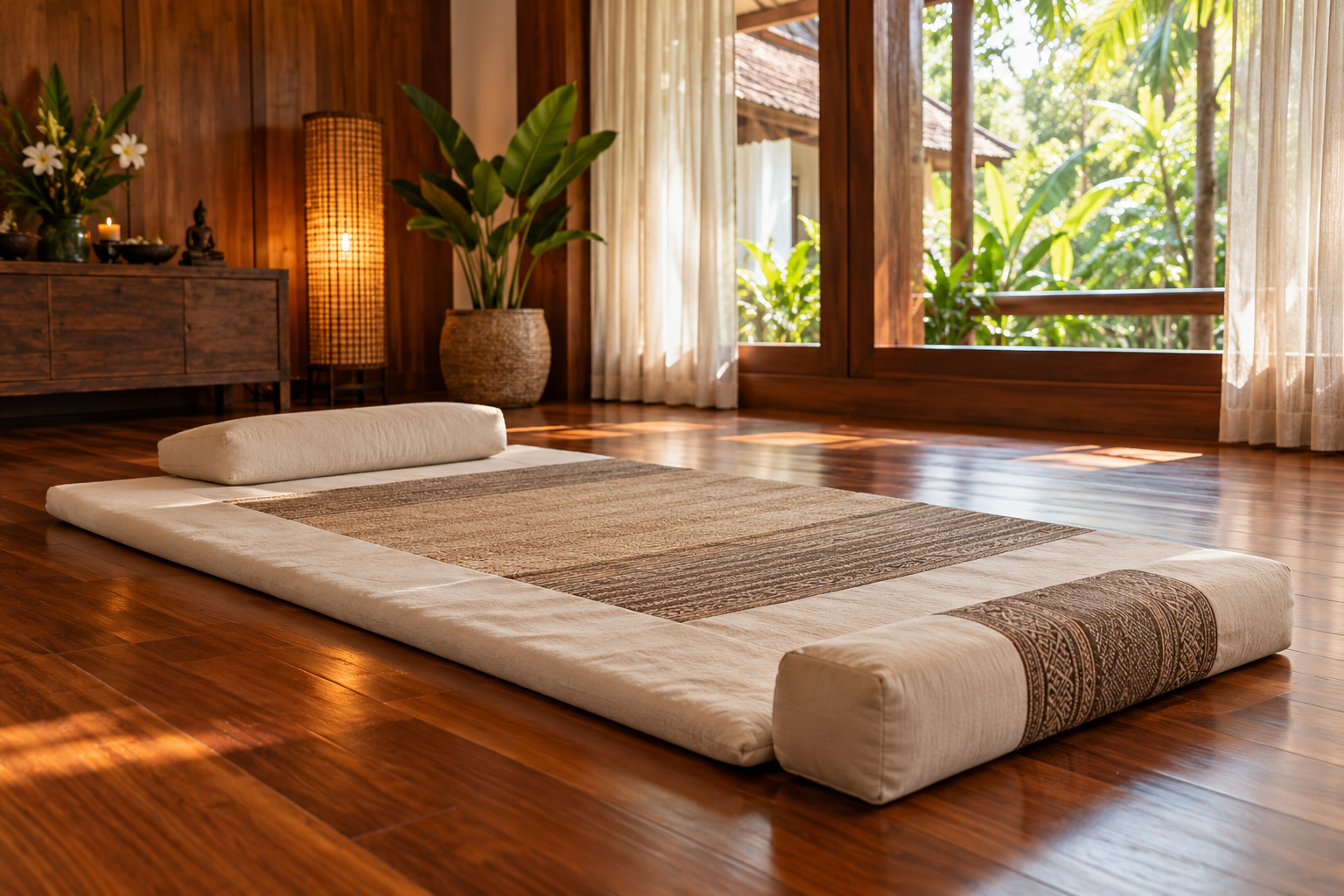
What Thai massage research has explored
A 2023 review from researchers linked to Siriraj Hospital and Mahidol University, with co-authors from Thailand’s Department of Thai Traditional and Alternative Medicine, summarized clinical research published from 2009 through 2022. It describes studies examining topics such as pain, muscle stiffness, circulation, digestion, and stress. The authors classify most evidence they reviewed for court-type and general Thai massage at levels 2–3 in the 2011 Oxford evidence framework. That is a map of research questions and study designs—not proof that every technique or session produces those outcomes.
Why the limits matter
A 2020 health-technology assessment registered with INAHTA reviewed Thai-massage research on selected clinical conditions. It found that the evidence did not support firm conclusions for those conditions: studies were small, used varied methods, often had a high risk of bias, and usually measured short-term outcomes. The assessment is a useful reminder to read the population, technique, comparison treatment, and follow-up period before turning a study result into a general benefit claim.
One later example shows how specific a study can be. A 2025 randomized trial enrolled 60 people with plantar heel pain and compared a single, standardized 40-minute traditional Thai massage protocol with ultrasound treatment; both protocols included stretching. Some pain measures improved from baseline in both groups immediately and at 24 hours, while ultrasound showed greater gains on selected pain and ankle-movement measures. This short clinical study does not tell us what a different massage, a different population, or a typical spa visit will achieve.
How to use this information before a spa visit
Coconut Paradise’s Thai massage page describes a menu built around traditional pressure and assisted stretching. It lists five options—Thai massage, Thai massage with tiger balm, Thai massage with oil, Signature Thai massage, and Deep Thai massage—each shown in 60- or 90-minute sessions. The menu does not describe a research protocol for each option, so a menu name should not be treated as evidence that a clinical study tested that exact session.
For a wellness visit, use the menu to choose the style and session length you prefer, then message the team with your selection and preferred time so availability and the current price can be confirmed. If you are considering massage because of persistent pain or a medical condition, speak with a health professional; massage information should not replace medical care.
Explore the current Thai massage options in Mae Nam
The most accurate takeaway is modest: Thai massage has been studied for several outcomes, but evidence varies by technique and condition. Research can help you ask better questions; it cannot guarantee a therapeutic result from a spa session.